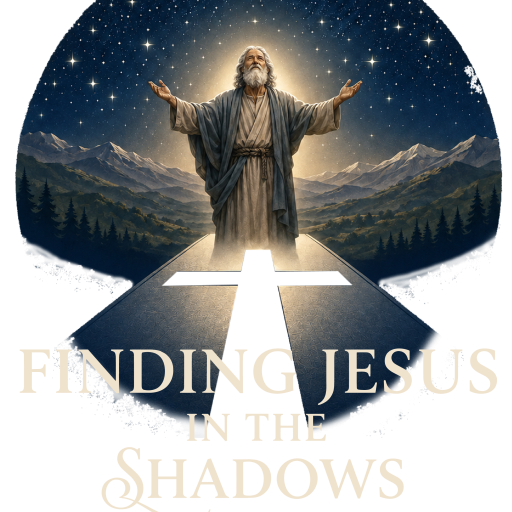
Understanding Biblical Foreshadowing and Typology
How the Old Testament Blueprint Points Directly to Christ
Series: Buried Treasure — Key Terms & Concepts
Key Scripture Passages: Luke 24:25–27, Romans 5:14, Colossians 2:16–17, Hebrews 8:5–6, 10:1
Focus: typology

When we open the ancient Scriptures, we quickly discover that the Old Testament is not a disconnected collection of moral tales; it is a unified story pointing forward to a greater reality. Learning the art of finding jesus in the shadows biblical typology gives us the foundational lens needed to read the master map of Scripture with absolute clarity.
For the thoughtful believer, a biblical “type” is never an accident or an afterthought. Instead, it is a deliberate blueprint engineered by the Master Builder Himself. Every historical landmark, person, and covenant ceremony cast an intentional shadow across ancient history—a shadow that finds its perfect, solid substance in the person and work of Jesus Christ.
Defining the Terms
When we read ancient narratives, we constantly encounter historical patterns and narrative clues that reach their ultimate fulfillment in the New Testament. While people often use these terms interchangeably, they perform two distinct functions in literature and theology:
- Foreshadowing: Simply defined as a hint of things to come. This is a broad literary device used throughout all forms of writing to build anticipation and prepare readers for future plot developments.
- Typology: Defined as a historical pattern fulfilled in Christ. This is a specific theological framework. Typology focuses on real historical people, events, or institutions that God sovereignly designed to serve as prefigurations—the type (typos)—of Jesus Christ, who is the ultimate antitype.
A Clear Distinction
Recognizing the boundary between these two tools keeps our biblical interpretation grounded and sound. While foreshadowing appears in nearly every great story ever written, typology belongs uniquely to God’s divine authorship across redemptive history.
Device | Definition | Scope |
Foreshadowing | A hint of things to come | Broad (General Literature) |
Typology | A historical pattern fulfilled in Christ | Specific (Biblical Theology) |
Why Fulfillment Matters
Typology is not merely a clever literary flourish; it reveals the unbreakable unity of God’s Word. Because biblical typology requires an actual historical fulfillment, every pattern points straight to Jesus.
When we study the life of Job, walk through the door of Noah’s ark, or observe the high priest entering the tabernacle, we are not searching for vague metaphors. We are witnessing real, historical shadows cast by the light of the cross. As we continue through the Buried Treasure series, we will unpack how these ancient patterns emerge across the Old Testament landscape, proving that every shadow finds its light, life, and meaning in Jesus.
Pause & Consider
We often approach the ancient histories of Scripture as if they were a distant warning ledger or a list of disconnected rules. Yet in the architecture of redemption, every dirt altar, wilderness boundary line, and sacrificial garment serves as a precise pointer to grace. God intentionally cast these shadows by the light of the cross, proving that our human brokenness never caught Him off guard. The rescue plan was already secure before the foundation of the world.
Let the heavy burden of spiritual anxiety fall away today. If you look at your life and see fragmented pieces, shifting landscapes, or painful seasons of waiting, remember the blueprint of the Master Builder. The same God who sovereignly shaped centuries of history so that every shadow met its fulfillment in Jesus is holding your story right now. He does not write accidental chapters. Step off the treadmill of self-reliance, rest in the finished work of the cross, and trust the One who is faithfully leading you home.
Let’s Talk About It!
Recognizing how the Old Testament shadows point directly to Jesus transforms how we read every single page of the Bible. How does this foundational truth speak to your heart today? I would love to hear your thoughts in the comments below:
- What Old Testament story or image has helped you see the character and beauty of Jesus most clearly?
- How does realizing that history is God’s sovereign canvas bring peace to the uncertain or chaotic areas of your life right now?
- What practical shifts help you read Scripture as a unified blueprint of grace rather than a rigid moral checklist?
If you haven’t yet discovered this deep peace and joy that is found only in surrender to Jesus, it would be my sincere honor to walk alongside you on that journey. You’re welcome to leave a comment or send me an email, and I will respond as quickly as possible. In the meantime, a wonderful place to start is by reading the Gospels of Mark and John in your Bible. Mark is short and action-packed, getting straight to the point of what Jesus did, while John is a beautifully profound look at exactly who Jesus claimed to be. If you want to explore further right here on the blog, you might also find comfort in posts within the series: Connections. — Beth
Key Terms & Concepts
Term / Concept | Scriptural Context | Definition |
Typology | Romans 5:14; Hebrews 8:5–6; Colossians 2:16–17 | A real, historical person, event, or institution in the Old Testament designed by God to serve as a prophetic blueprint fulfilled completely in Jesus Christ. |
Foreshadowing | Luke 24:25–27; Hebrews 10:1 | Narrative or atmospheric hints embedded in Scripture that build anticipation for the fuller light of the Gospel. |
Federal Headship | Romans 5:12–19; 1 Corinthians 15:22, 45 | The biblical principle of representation where Adam's disobedience brought sin and condemnation to all humanity, while Christ’s obedience brings life and righteousness to all who are in Him. |
Imputed Righteousness | Genesis 15:6; Romans 4:3–5; 2 Corinthians 5:21 | The gracious act of God crediting the perfect, unearned righteousness of Jesus directly to the believer's account, completely replacing human effort and self-justification. |
Leave a Reply